
Omnichannel Payments: Connecting In-Store, Online, and Mobile Sales

Customers do not think about payment channels the way businesses do.
They simply expect to be able to buy.
They may discover a product online, visit a store, complete the purchase through a mobile device, and return later through another channel.
From the customer’s perspective, it is one relationship with one business.
Behind the scenes, however, those transactions may be moving through entirely different systems.
That is where omnichannel payment infrastructure becomes important.
What Are Omnichannel Payments?
Omnichannel payments connect the different environments in which a business accepts transactions.
Depending on the business model, that may include:
In-store POS payments
eCommerce transactions
Mobile payments
Contactless payments
Digital wallets
Other integrated sales channels
The objective is not simply to offer more ways to pay.
It is to create a payment ecosystem in which those channels can operate as parts of the same business rather than isolated systems.
The Problem With Disconnected Payment Channels
Adding new sales channels is relatively easy.
Managing them efficiently is more difficult.
A retailer may have one system for its physical locations, another for its eCommerce store, and additional technology for mobile transactions.
If those systems are poorly connected, teams may face fragmented payment reporting, manual reconciliation, limited transaction visibility, and inconsistent operational workflows.
As the business grows, the complexity grows with it.
The problem is no longer accepting payments.
It is understanding them.
Why Unified Payment Visibility Matters
Businesses need to know what is happening across their sales environment.
How are different channels performing?
Where are transactions coming from?
Are payment trends changing?
Can teams easily reconcile activity across systems?
When payment data is fragmented, answering these questions becomes unnecessarily difficult.
A connected omnichannel payment strategy can give businesses a more coherent view of transaction activity while simplifying the operational work required to manage multiple sales channels.
Feenix specifically supports omnichannel retail payments across in-store, online, and mobile environments as part of its retail payment offering.
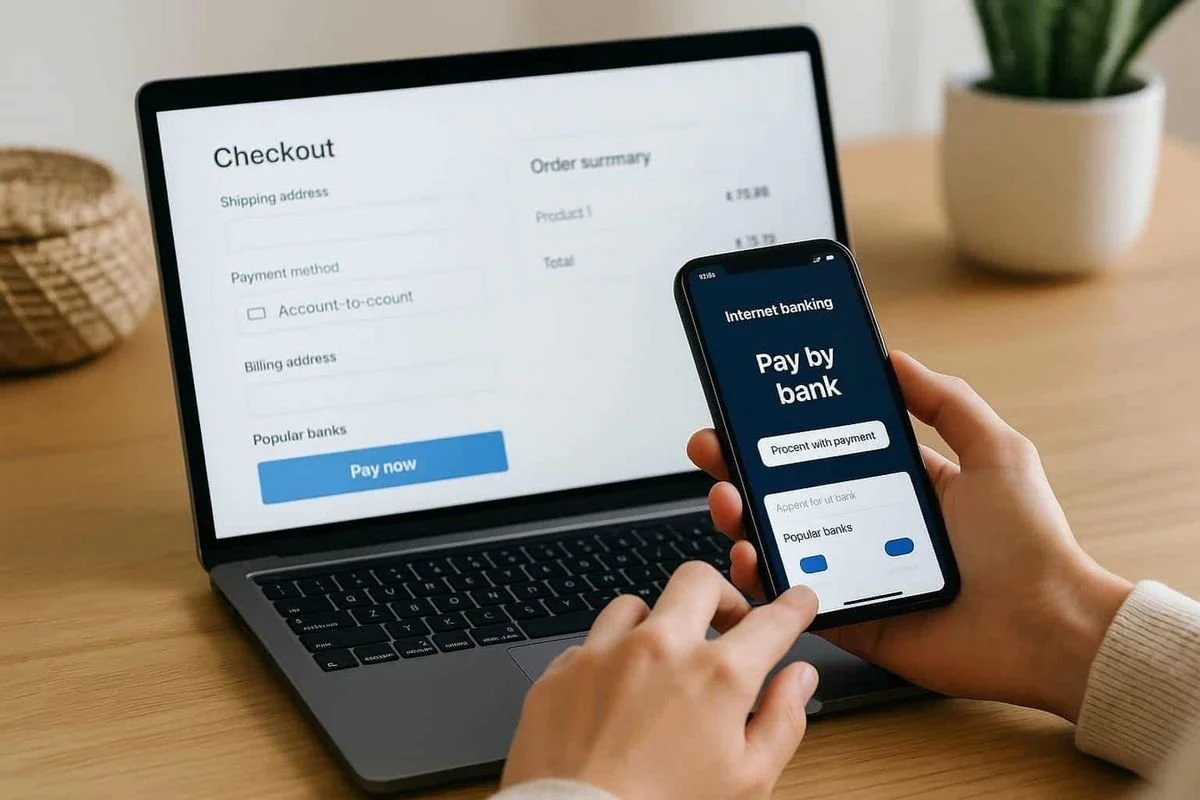
Omnichannel Is Also About Customer Experience
Operational efficiency is only one side of the equation.
Customers increasingly move between physical and digital environments without thinking about the distinction.
Payment infrastructure needs to support that behavior.
Whether a transaction happens at a countertop terminal, through an eCommerce checkout, or from a mobile device, the payment experience should remain reliable and easy to complete.
The technology behind those channels may differ.
The quality of the experience should not.
When Businesses Should Consider an Omnichannel Strategy
An omnichannel approach becomes particularly valuable when a business:
Operates physical and online stores
Adds eCommerce to an established retail operation
Expands into mobile selling
Manages multiple locations and channels
Struggles to consolidate payment reporting
Relies heavily on manual reconciliation between systems
At that stage, continuing to treat each payment channel independently can create more complexity than flexibility.

How Feenix Supports Connected Commerce
Feenix works with businesses across both retail and eCommerce environments, offering POS systems, online payment capabilities, contactless payment options, integrations, and reporting tools designed to support different ways of accepting payments.
The value of these tools is not simply their availability.
It is how they can be structured around the merchant’s actual business model.
For a growing omnichannel business, payment infrastructure should create connection rather than another layer of fragmentation.
Conclusion
Modern commerce does not happen in one place.
Neither should payment strategy.
Businesses that connect in-store, online, and mobile payment environments can simplify operations, improve visibility, and create a more consistent experience for customers.
If your payment channels have grown independently and your teams are now managing separate systems, separate reports, and separate workflows, Feenix can help you bring them together.
Your customers see one business. Your payment infrastructure should too.

About Us
At Feenix, we help businesses across the U.S. accept payments more easily and affordably. Our goal is to simplify every transaction, lower your processing costs, and provide flexible solutions that fit the way you do business — whether you run a storefront, service-based company, or online operation. We're here to be your partner in growth, not just your payment processor.
